


Who is? Brain Teaser & Riddles
4.725.45K Reviews
App Specs
- Version
- 1.14.9
- Updated On
- License
- Free
- Downloads
- 50,000,000+
- Developer
- Unico Studio
- Categories
- Trivia
- Platform
- Android, iOS
Screenshots
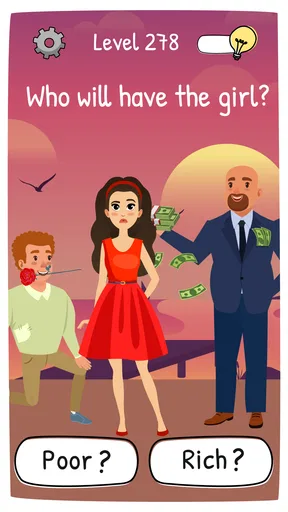
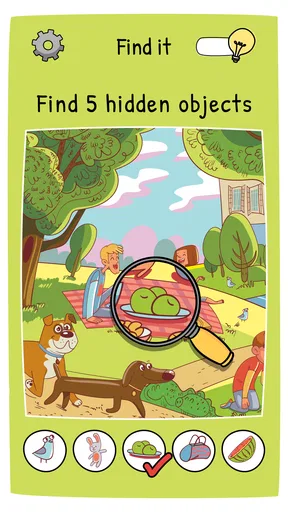
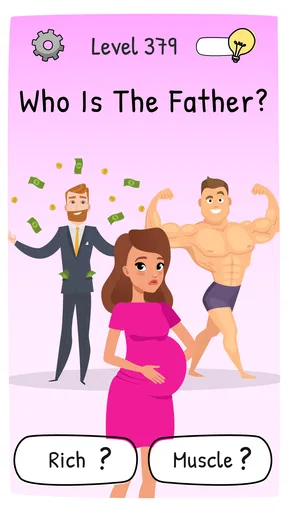
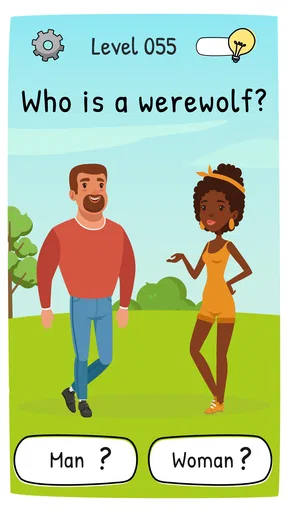
 Analysis by AppCompare
Hey there! So, I recently got my hands on this intriguing app called Who is? Brain Teaser & Riddles. If you’re into mind-boggling challenges and love putting your brain to the test, you might want to stick around for this one. Let me walk you through my experience with it.
What to Expect from Its Mystery Puzzles
This is a free trivia game from Unico Studio, built around short mystery scenarios rather than a conventional quiz with a list of facts and multiple-choice answers. The premise is to inspect a situation, notice a clue, and decide what it means. Its focus on questions such as who is lying gives each puzzle a small detective-story feel, which is a welcome change if trivia apps usually leave you choosing answers from a menu.
The game has reached over 50 million installs and holds a 4.7 average from around 1.8 million ratings. That scale suggests it has broad appeal, but it doesn’t mean every puzzle will suit every player. I’d approach it as casual entertainment: satisfying when a visual clue clicks, occasionally irritating when the intended answer feels more like a trick than a deduction.
Its age rating is Everyone 10+, so it can be a reasonable choice for older children and families who enjoy talking through a puzzle together. I would still expect some answers to depend on noticing details or interpreting a scenario, rather than applying formal trivia knowledge. That makes it easier to join in without studying, though younger players may appreciate a hint or a second person’s perspective when a clue is subtle.
Getting Started with Who is?
Setting up the app was a breeze. It’s available on both Android and iOS, so you’re covered no matter what device you’re on. I just downloaded it from the app store, and bam—I was ready to dive into the world of riddles and brain teasers. On Android, the listed minimum requirement is version 7.0; the current release is 1.14.5. The game is free to start, with optional in-app purchases priced from $1.99 to $14.99 per item, so I’d keep that in mind if a child will be playing or if you prefer to avoid optional spending.
Once you open the app, you’re greeted with a simple and intuitive interface. The design is minimalistic, which I appreciate because it keeps the focus on the puzzles themselves. There’s no unnecessary clutter to distract you.
One thing I noticed right off the bat is that Who is? Brain Teaser & Riddles doesn’t waste time with lengthy tutorials. You’re thrown straight into the action, which is perfect if you’re eager to start solving some puzzles. For a first-time player, that direct start is reassuring: you can learn by trying a puzzle rather than memorizing instructions. I’d take a moment to read each scene carefully before tapping around, though. In this kind of game, a small visual detail can matter more than the first explanation that comes to mind.
Worth Reading Before You Choose

Baby Panda World Brings Quick Play to Modern Phones, but Its Game Library Feels Busy

ESPN’s Live Game View Makes Following Close Games Easier

QuizzLand Review: A Good Fit for Short Trivia Breaks, Not Every Player

Basketball Stars: Multiplayer Is Fast, but Can It Recover When Matches Go Wrong?

WEBTOON Turns Phone Updates Into a Better Reading Routine

Link to Windows Runs on Shared Habits, Not Social Feeds
The Puzzles: A Mix of Fun and Frustration
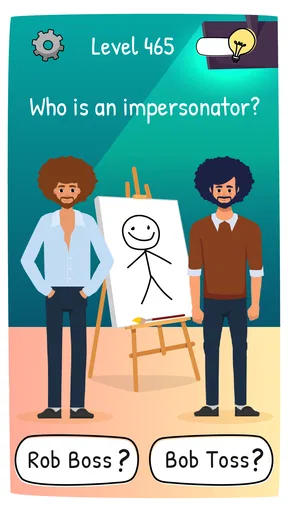
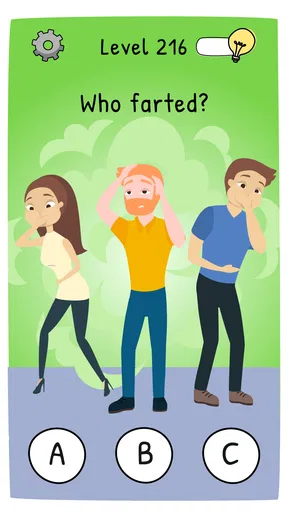
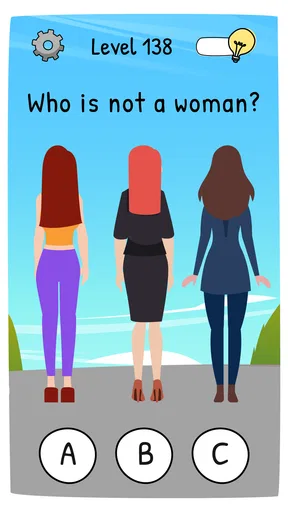
Now, the heart of the app—its puzzles. They range from relatively simple to "I need a PhD to solve this" kind of hard. The diversity is what makes it so engaging. You’re not just doing the same kind of puzzle over and over; each level presents something new to tackle.
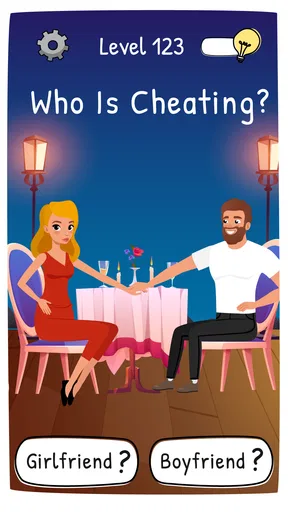
One of the cool features is that the riddles are presented in a story format. You might have to find out who’s lying, solve a crime scene, or figure out who’s cheating. It’s like playing detective, and honestly, who doesn’t love a good mystery?
Some puzzles require you to think outside the box. I mean, really outside the box. There were times I found myself overthinking the solutions, only to realize it was something ridiculously simple. But that’s the charm, right? It keeps you on your toes.
How I’d Approach a Tricky Level
When I hit a puzzle that didn’t make sense, I found it useful to separate what the scene actually shows from what I was assuming. I’d look at the people, objects, and small differences first, then ask which detail supports one explanation better than another. That simple pause helps avoid tapping randomly and makes the eventual answer feel more earned.
If a first attempt fails, I’d change one part of my reasoning rather than repeat the same action. For example, I might check whether a clue is in the background or whether a character’s behavior contradicts the story. This is a practical way to get more out of the game: even when I need help, I can see what I missed instead of treating the puzzle as a pure guessing game.
The short, self-contained scenarios also make the game easy to fit into a normal day. I could play a level while waiting for a meal, take a break between tasks, or hand the phone to a friend and compare theories. It works best as a small shared challenge, not as something that requires a long uninterrupted session. If you enjoy puzzles that invite conversation, try describing the clue aloud before acting; another person may spot an assumption you overlooked.
Interactive Elements and User Experience
The app incorporates interactive elements that make solving each riddle even more engaging. You might have to tap, drag, or even shake your phone to unlock the next clue. It’s these little surprises that keep the experience fresh and exciting.
One thing I found super helpful is the hint system. If you’re stuck on a particularly challenging puzzle, you can use hints to nudge you in the right direction. But use them wisely—they’re limited, and you might want to save them for when you’re really stuck. My rule would be to spend a little time inspecting the scene first, then use a hint only after I’ve tried a different interpretation. That keeps the answer from being handed to me before I’ve had a fair chance to solve it.
The user experience felt smooth in my play, but the presentation is intentionally simple, so players looking for elaborate animation, deep character development, or a complex adventure structure may find it lightweight. It is closer to a sequence of bite-sized brain teasers than a story game with a continuous plot. That distinction matters: I’d recommend it for quick mental breaks, but not as a substitute for a long-form puzzle adventure.
Where It Fits Among Trivia Games
Compared with ordinary trivia apps, which often test memory across subjects, this one puts more weight on visual observation, lateral thinking, and interpreting a brief scenario. That makes it a better pick when I want to reason something out than when I want to learn facts or compete on general knowledge. Compared with a traditional riddle collection, the interactive scenes give me something to inspect and manipulate, though the answers can feel less satisfying if I expected every solution to follow strict logic.
I’d choose it for a casual commute, a short wait, or a low-pressure game with family. I’d skip it if I want a serious logic trainer with clearly stated rules, a competitive trivia format, or puzzles that reward long chains of formal deduction. It can also be a poor match when I’m tired and easily annoyed by trick questions; stepping away and returning later is better than burning through hints just to clear a level.
A Few Words on Accessibility
Accessibility in apps is crucial, and Who is? Brain Teaser & Riddles does a decent job in this area. The text is clear and easy to read, and the interface is straightforward. However, I did notice that the app doesn’t offer much in terms of customization for those who might need larger text or different color schemes. It’s something to keep in mind if accessibility features are a priority for you. Because some puzzles rely on noticing details in an illustrated scene, players who have difficulty distinguishing small visual elements may find certain levels harder than the wording alone suggests.
Practical Trade-Offs Before You Continue
A common source of confusion is assuming that every puzzle has a purely verbal answer. Here, the story gives context, but the solution may depend on interacting with the scene or noticing an inconsistency. If a reasonable answer does not work, I’d reread the wording and inspect the picture instead of concluding immediately that the puzzle is unfair. At the same time, some trick answers are part of the style, so players who prefer unambiguous clues may not enjoy every level.
The game is free to download, but optional purchases are available. I’d decide beforehand whether I’m comfortable with in-app spending, especially if the phone is shared with a child. Purchases can change how much a player spends, so the sensible approach is to treat them as optional rather than necessary for deciding whether the basic puzzle style is enjoyable. If I were introducing it to someone else, I’d let them try the opening challenges first and see whether they like the visual riddles before considering anything extra.
For a first session, I’d aim for one small success: read the scenario, inspect the scene, make a deliberate choice, and notice what reasoning worked. There’s no need to race. If I get stuck, I can leave the puzzle for a while instead of using a hint immediately. That makes the first play feel more like solving than tapping through, and gives me a fair sense of whether this particular mix of comedy, observation, and misdirection suits me.
Final Thoughts
All in all, Who is? Brain Teaser & Riddles is a fantastic app for anyone who loves a good brain workout. The variety of puzzles keeps things interesting, and the interactive elements add a fun twist. Whether you’re looking to kill time or seriously challenge your brain, this app has got you covered.
So, if you’re ready to put your detective hat on and dive into a world of riddles, I’d definitely recommend giving this app a try. Just be prepared—you might find yourself hooked!
Pros
- Engaging brain teasers enhance cognitive skills.
- Variety of riddles keeps the game interesting.
- Simple interface makes navigation easy.
- No intrusive ads for a smooth experience.
- Multiplayer mode for competitive fun.
Cons
- Limited hints can lead to frustration.
- Repetitive themes in some puzzles.
- Occasional bugs disrupt gameplay.
- In-app purchases can be pricey.
- Requires internet connection to play.
FAQs for Who is? Brain Teaser & Riddles
What is 'Who is? Brain Teaser & Riddles' about?
'Who is? Brain Teaser & Riddles' is an engaging puzzle game designed to challenge your logical thinking and problem-solving skills. The game presents a series of riddles and scenarios where players must identify the correct answers using clues provided. It's a fun way to exercise your brain and improve cognitive abilities.
Is 'Who is? Brain Teaser & Riddles' suitable for all ages?
Yes, 'Who is? Brain Teaser & Riddles' is suitable for a broad age range. The puzzles are designed to be accessible yet challenging, making them enjoyable for both younger players and adults. However, younger children might need assistance with some of the more complex riddles.
Does 'Who is? Brain Teaser & Riddles' require an internet connection?
No, 'Who is? Brain Teaser & Riddles' can be played offline, making it a great option for entertainment on the go. However, some features, such as updates or certain in-app purchases, may require an internet connection to access.
Are there in-app purchases in 'Who is? Brain Teaser & Riddles'?
Yes, the app includes optional in-app purchases. These can enhance the gameplay experience by providing additional hints or removing ads. While the game is free to play, these purchases can help players who prefer a smoother, uninterrupted experience.
How does 'Who is? Brain Teaser & Riddles' enhance cognitive skills?
The game improves cognitive skills by encouraging players to think critically and creatively. Each riddle requires attention to detail, logical reasoning, and lateral thinking. By regularly playing, users can enhance their problem-solving abilities, memory, and concentration.


